“I submitted this two months ago. Why hasn’t it moved?”
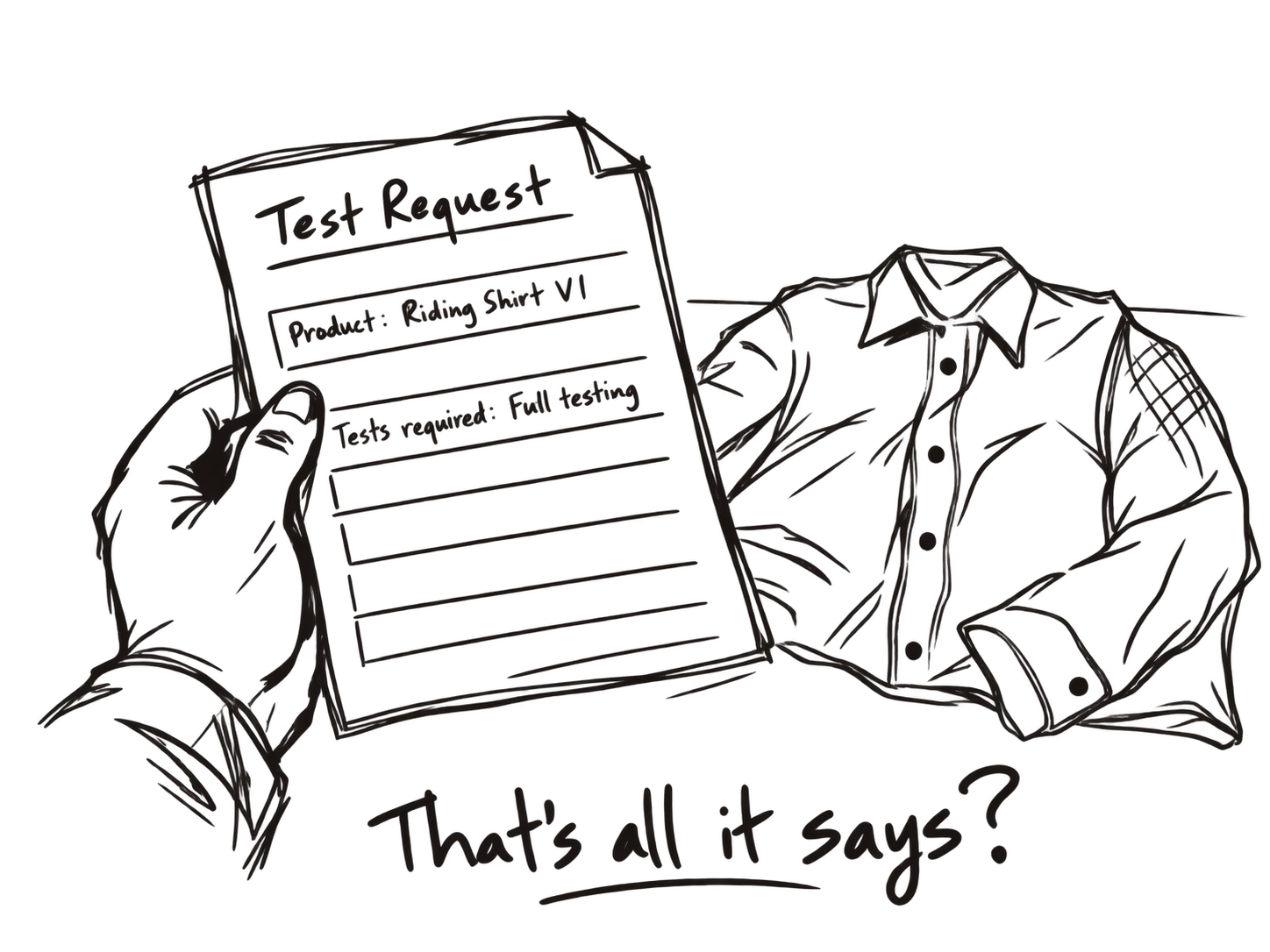
It starts at the test request. A form lands with the test requested written as one line: EN 17092, say, or EN 13594. No construction. No material names. Some test houses stop there and ask. Plenty don’t. They label what’s in front of them Material 1, Material 2, Seam 1, Seam 2, test it, and send back a clean report.
The problem shows up later, at certification, when Material 1 and Material 2 don’t line up with what the technical file actually says: TEXT10 Cordura 600D, KEV08 Para-aramid 380gsm. It doesn’t add up. Getting that report reissued costs money, usually somewhere around £100, and it’s the brand who pays. Not the test house’s fault. You didn’t name your own materials.
Sometimes the factory hands over a report of their own to use, one they’ve already got sitting there, and it can’t go anywhere near certification. The evidence may not meet the assessing body’s acceptance requirements, including any accreditation scope it requires. Or the materials named still don’t match the technical file. Or, worse, the report’s perfectly fine, except it’s in the factory’s name, not the brand’s, and it isn’t the brand’s to submit without the factory’s written authorisation to use it. That authorisation hasn’t come through, and the factory’s just shut for two weeks over the holiday, so there’s nobody left to sign it off. None of it surfaces until someone actually tries to submit it.
Samples go the same way. One jacket sent when the test plan actually needed three, and half the time nobody’s checked the standard’s sample table to know that. Do you need loose swatches as well as a finished garment? Can every test come off one jacket, cut into pieces, or does a failed test mean there’s nothing left to redo it with? Most of the time neither the brand nor the factory has worked that out. It gets sent and hoped for. If more turn up short mid-testing, they have to be made and shipped, and that’s not overnight. Two to three weeks from a factory in Pakistan or China is normal. Do not assume someone upstream has checked it. Agree the sample plan with the test house and name the person who will get the samples there.
Then a test fails. The better test houses tell you the moment it happens, rather than waiting for the final report. That single early flag can save two weeks against waiting for the report. Plenty of brands never see it. It lands as an email among a hundred others, the report never gets generated because nobody chased it, and the job sits open with no one aware it’s stalled.
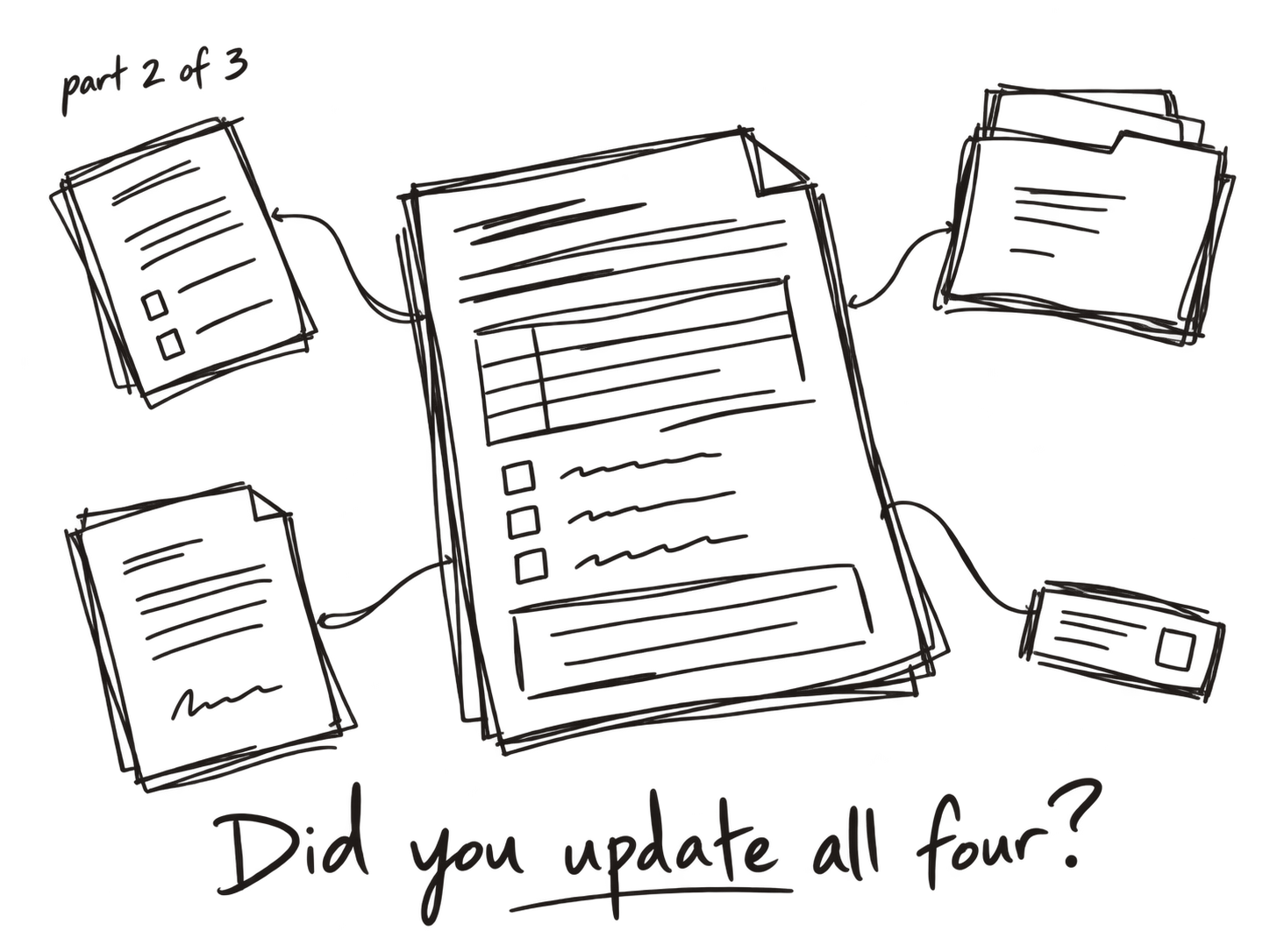
Testing finishes eventually, and this is where the real delay starts. Testing and certification have different outputs, even within the same organisation. They can coordinate, but you need to agree who hands over the results and who submits the documentation. A finished report does not itself complete the application. If the documentation set, the technical file, the application, the declaration of conformity, only gets started once results land, you’re weeks behind before you’ve begun. It should start the day the test request goes in. A decent request already carries half of what the technical file needs, provided it actually names every mandatory test.
Someone new inherits a project that used to run on a relationship, on the brand side or on the test house and certification body’s side, and nobody explains how the old contact used to work things. Assessors move on too, and the one who replaces them has no idea the documentation was never started.
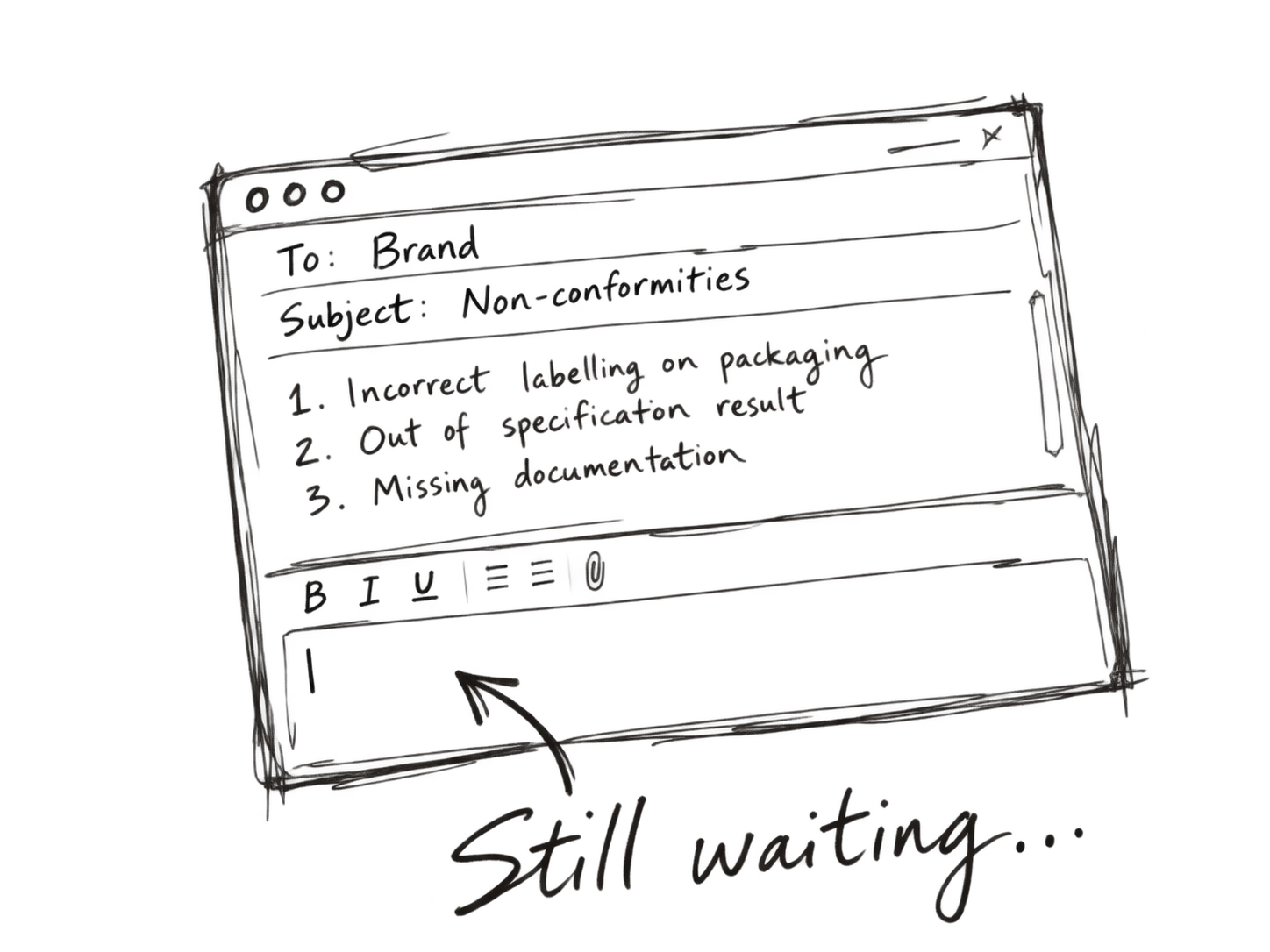
Then the comments arrive. An assessor sends a list of non-conformities, and it’s read as background information, not a list of things to do. Two months later the brand asks if the certificate’s ready. It isn’t. The comments sent two months ago were never actioned. Here they are again, unchanged.