What a report contains
Underneath the pass or fail, every report is making a set of separate statements. Read them in this order:
- The product it tested. A name, model or description, sometimes a photograph. This identity line is the first thing to read, not the last.
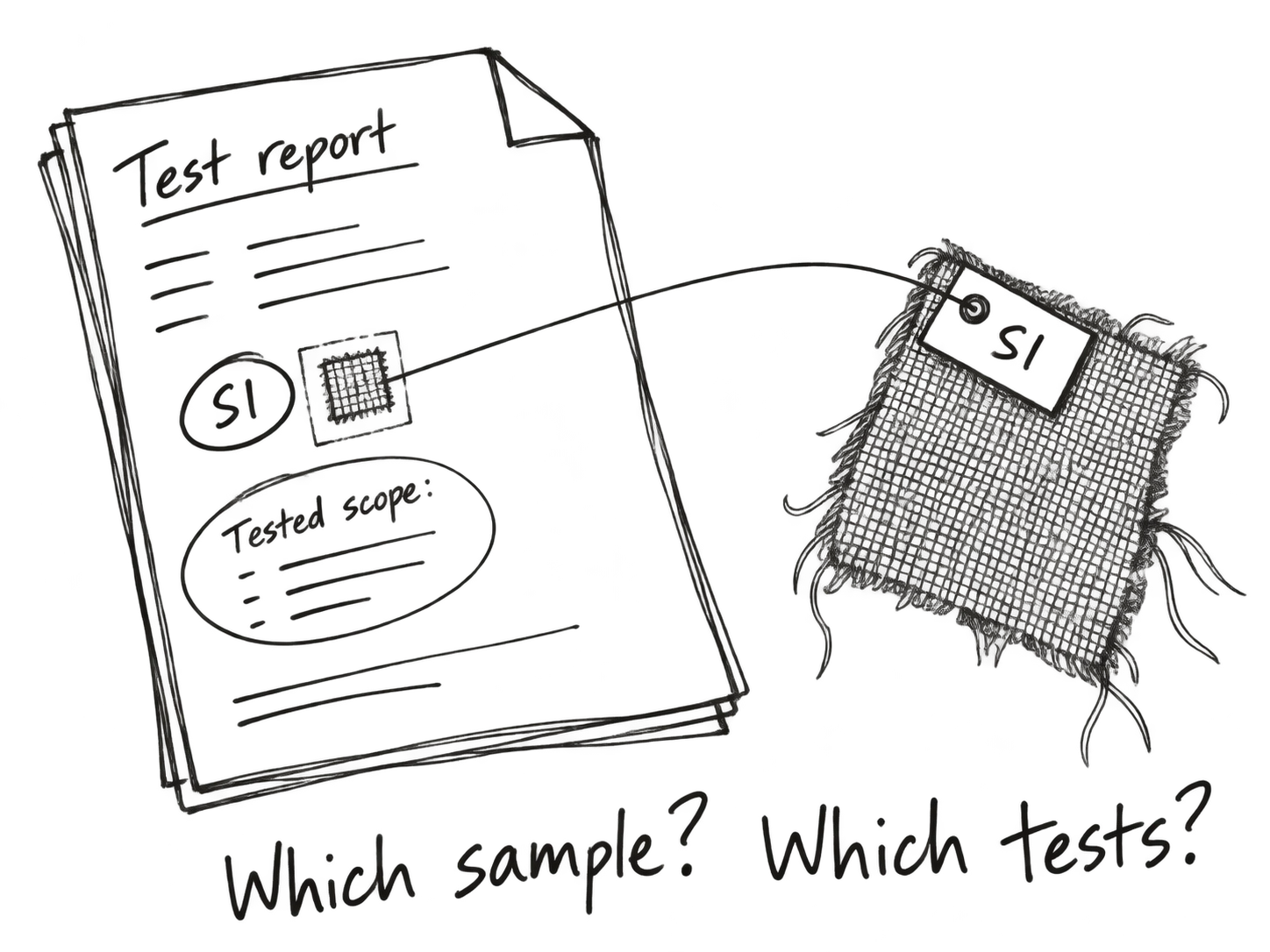
- The standard, its version, and the exact clauses. A report is rarely against a whole standard. It is against named clauses at named performance levels. The clauses it does not mention, it did not test. The version matters as much as the number: a report against a superseded edition tested exactly what that edition asked for, so check whether it still supports the requirements for the intended application.
- The sample, the method and the results. What was submitted, how it was tested, and how it performed against each clause. Any stated limitations belong here too.
- The date, and who did the testing. When it was done, and whether the test house was in a position to do it.
- That it is finished. Signed and issued, not a draft circulated for comment.
Check competence and report acceptance
Check who performed the work and whether any claimed ISO/IEC 17025 accreditation (the standard test houses are accredited to) covers the methods used. Accreditation is granted for a listed set of methods, called the scope, and a logo alone does not establish that every result is within it.
For a certification application, ask the receiving body what evidence it will accept. Factory testing can be useful for development or production control, but its acceptance for type examination (the certification body's assessment of the product design) must be established. A result outside an accreditation scope must not be described as accredited.
The three questions to ask of any report
Before one reassures you, put it through three questions.
- Is this my product? Does the name, model and construction on the report match the product you sell? A factory reusing a report from a similar item with the product name changed is a pattern worth actively ruling out, not assuming against. Watch for a factory report with your product name dropped onto someone else’s test, and for the same report number reissued with a different construction inside it. That is not your evidence. If references differ, look for a signed and dated record, kept by the test house or the factory, connecting the sample to the product. Without it, the link is unresolved. If construction changed after the test date, the report describes a product you no longer make. What that looked like on one job
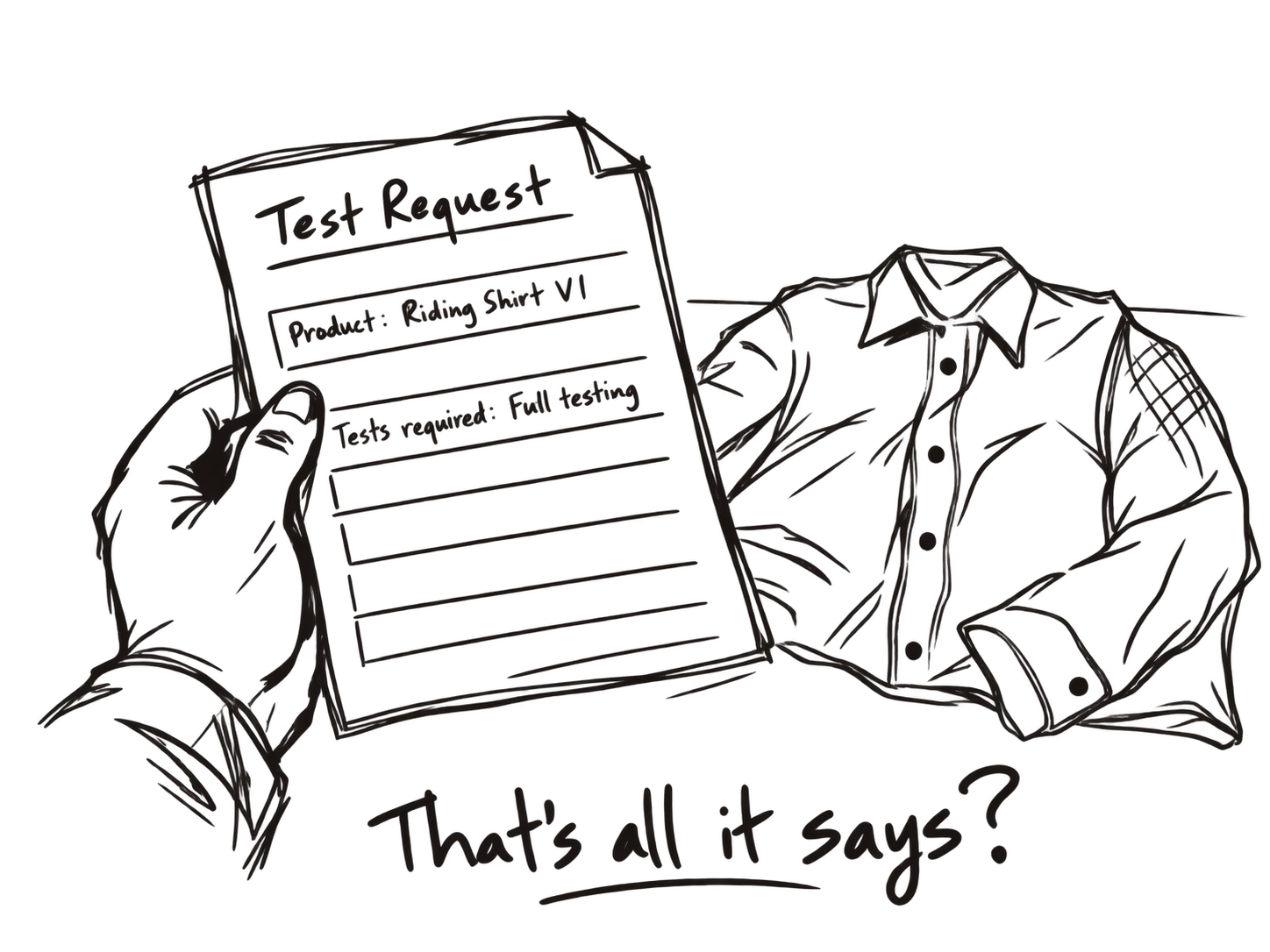
- Does it cover everything that applies? A report against some of the relevant clauses is normal. A report you have mistaken for full coverage is a risk. What a test house was asked to test and what the complete assessment requires may be different lists. Ask whether the agreed programme covers the full intended route or selected tests. If you did not specify the full scope, assume the report does not carry it. If the label claims a level the report does not show, the claim is unsupported.
- Is it still current? The PPE Regulation does not give every test report a five-year expiry. Check the current product, applicable requirements and the receiving body’s acceptance. A change may need additional evidence, but neither an old report nor a new standard automatically means a full retest. Trace flags reports approaching five years to resolve acceptance and budget questions early.
Sources and further reading
For the legal requirements and their application, see the PPE Regulation (EU) 2016/425, the European Commission's PPE guidance and the GB PPE guidance.